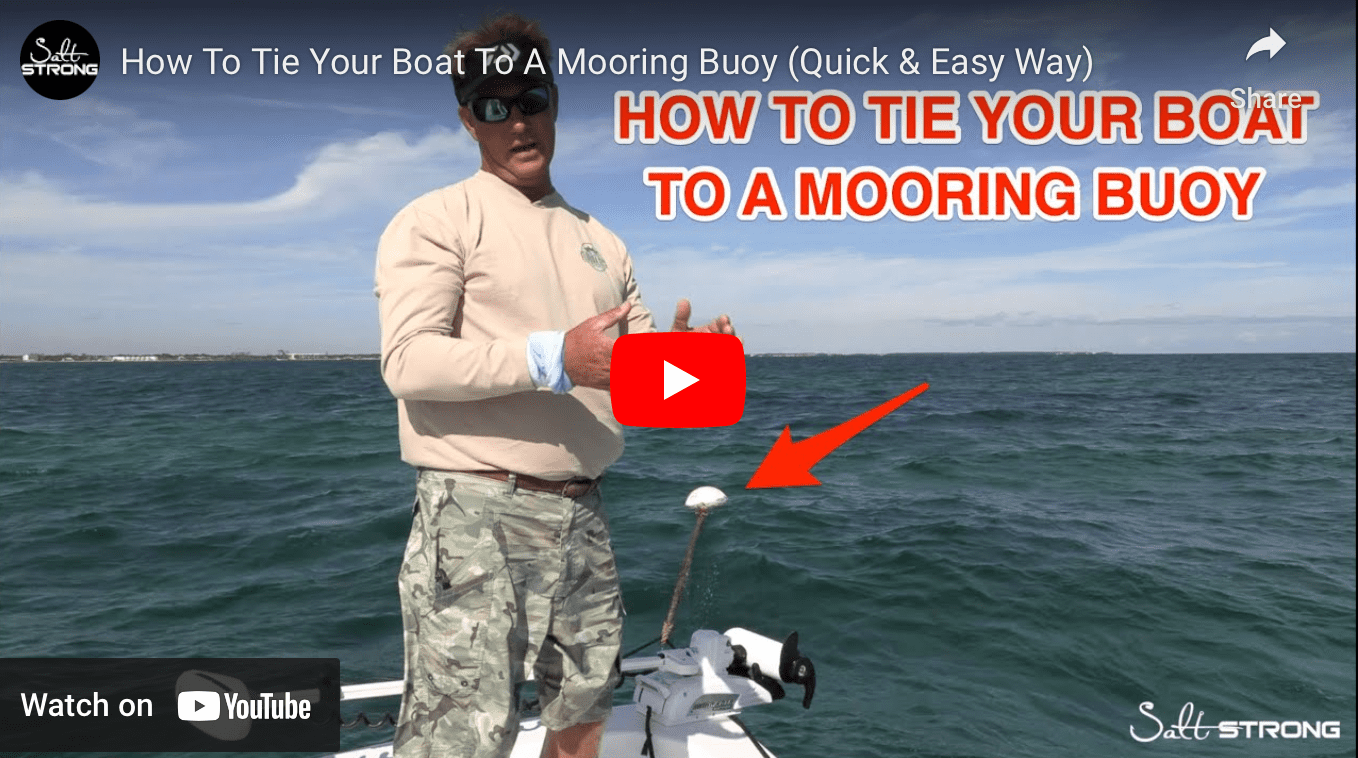
Tying up a boat to a mooring buoy is a convenient option for overnight stays or extended periods of time when you are away from your boat. Here are the steps for tying up a boat to a mooring buoy:
- Approach the mooring buoy slowly and carefully. Look for any other boats or obstacles that may be in your way and give them plenty of space.
- Position your boat alongside the mooring buoy, with the buoy on your port (left) side.
- If the mooring buoy has a line attached to it, pick up the line with a boat hook or other long-handled tool. If the mooring buoy does not have a line attached, you can attach a line to the buoy using a boat hook or other tool.
- Secure the line to the bow of your boat using a cleat hitch or other knot. Make sure the line is taut, but not too tight, to allow for movement of the boat as it moves with the tide and wind.
- If the mooring buoy has a pennant or flag attached to it, attach the pennant or flag to the bow of your boat using a cleat hitch or other knot. This will help to identify your boat and prevent other boats from attempting to tie up to the same buoy.
- If the mooring buoy is not equipped with a line or pennant, you can use a longer line to secure your boat to the buoy. Tie one end of the line to the buoy, and the other end to the bow of your boat, using a cleat hitch or other knot. Make sure the line is taut, but not too tight, to allow for movement of the boat as it moves with the tide and wind.
- Once you have securely tied up your boat to the mooring buoy, double-check all of your lines and make sure they are in good condition and properly secured.
By following these steps and using proper knot-tying techniques, you can ensure that your boat is safely moored and ready for your next adventure on the water.
Here is a great video from Salt Strong showing the steps involved: